Room pressure monitors and differential pressure displays in Saudi Arabia
We supply, install, calibrate and connect room pressure monitors for negative-pressure isolation rooms, positive-pressure operating theatres, pharmacies, laboratories and clean rooms in Riyadh, Jeddah, Dammam and across Saudi Arabia.
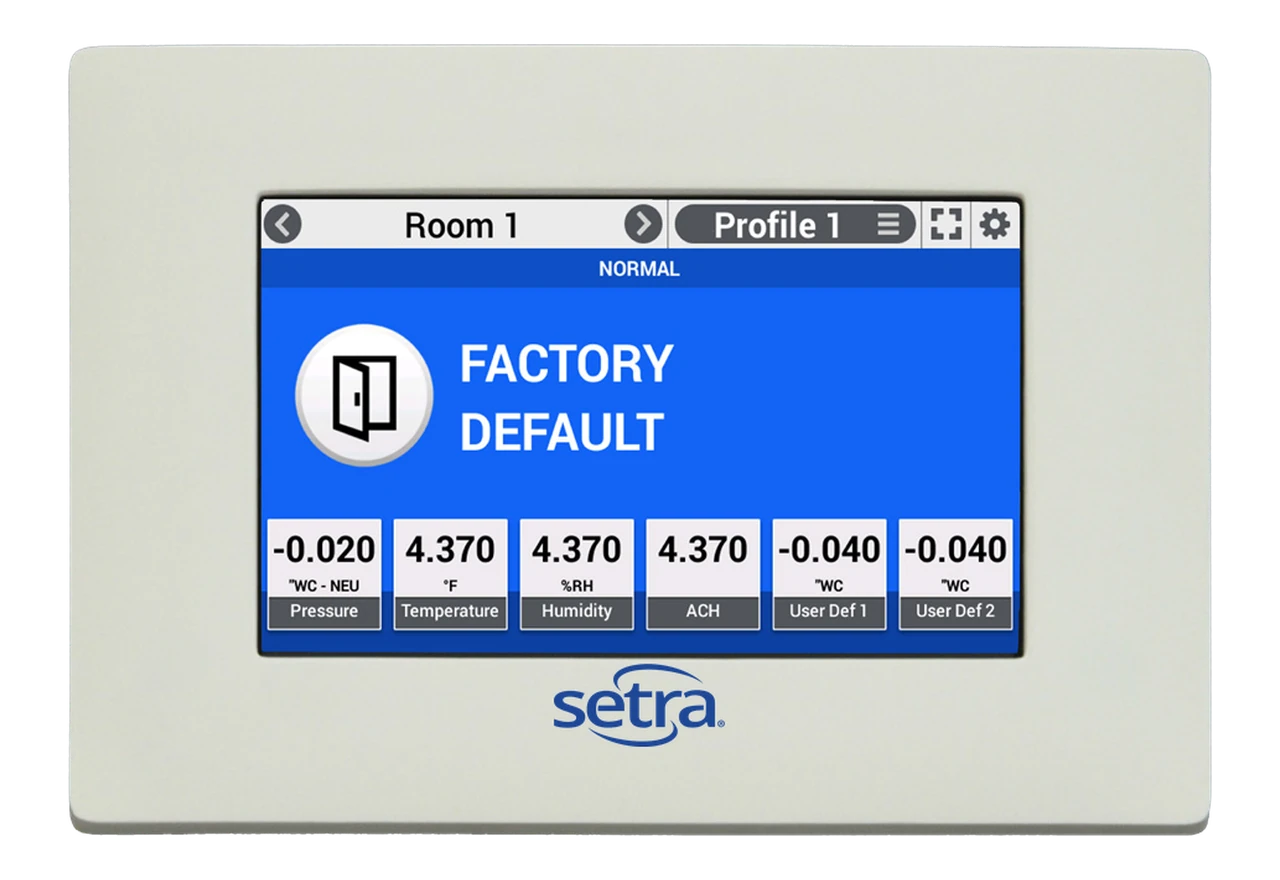
A room pressure monitor, also called a differential pressure display or room pressure indicator, is a wall-mounted device at the door of a critical room. It measures the pressure difference between the room and the corridor in pascals, shows whether the room is negative or positive, and raises an audible and visual alarm when the pressure is lost, for example when the door is left open.
How a room pressure monitor works
- MeasureA low differential pressure sensor compares the room with a reference space, usually the corridor, through two pickup ports.
- DisplayThe screen at the door shows the live value in Pa and the room status: negative, positive or neutral.
- AlarmIf the value crosses the alarm limit for longer than the door delay, the monitor turns red and sounds an alarm.
- ReportValues and alarms go to the BMS over BACnet or an analog signal for central monitoring and trend logs.
Negative, positive and cascade pressure
| Room | Pressure | Why |
|---|---|---|
| Airborne infection isolation room (AII) | Negative, at least 2.5 Pa (ASHRAE 170) | Keeps airborne pathogens inside the room |
| Protective environment room (PE) | Positive, at least 2.5 Pa (ASHRAE 170) | Protects immunocompromised patients from corridor air |
| Operating theatre | Positive | Keeps the sterile field clean |
| Compounding pharmacy (USP 797 / 800) | Cascade: ante-room, buffer room, hazardous-drug room | Controls the direction of airflow between rooms |
| Pharmaceutical / GMP clean room | Cascade by cleanliness grade | Protects the product and keeps audit records |
Final setpoints follow the project specification and the applicable healthcare and pharmaceutical guidelines.
How to choose a room pressure monitor
Parameters
Pressure only, or also temperature, humidity and air changes on the same screen?
Accuracy and range
Isolation rooms work at a few pascals, so choose a low range (±12.5 to ±50 Pa) with high accuracy.
Alarm and visibility
Local audible alarm, colour status, door delay, and visibility from the corridor.
BMS connection
BACnet/IP, BACnet MS/TP or an analog output, matching the building's BMS.
Wall and cleaning
Flush mounting depth, IP54 face, and resistance to hospital disinfectants.
Control
Monitoring only, or monitoring with control of VAV boxes and valves.
Monitors we supply and install
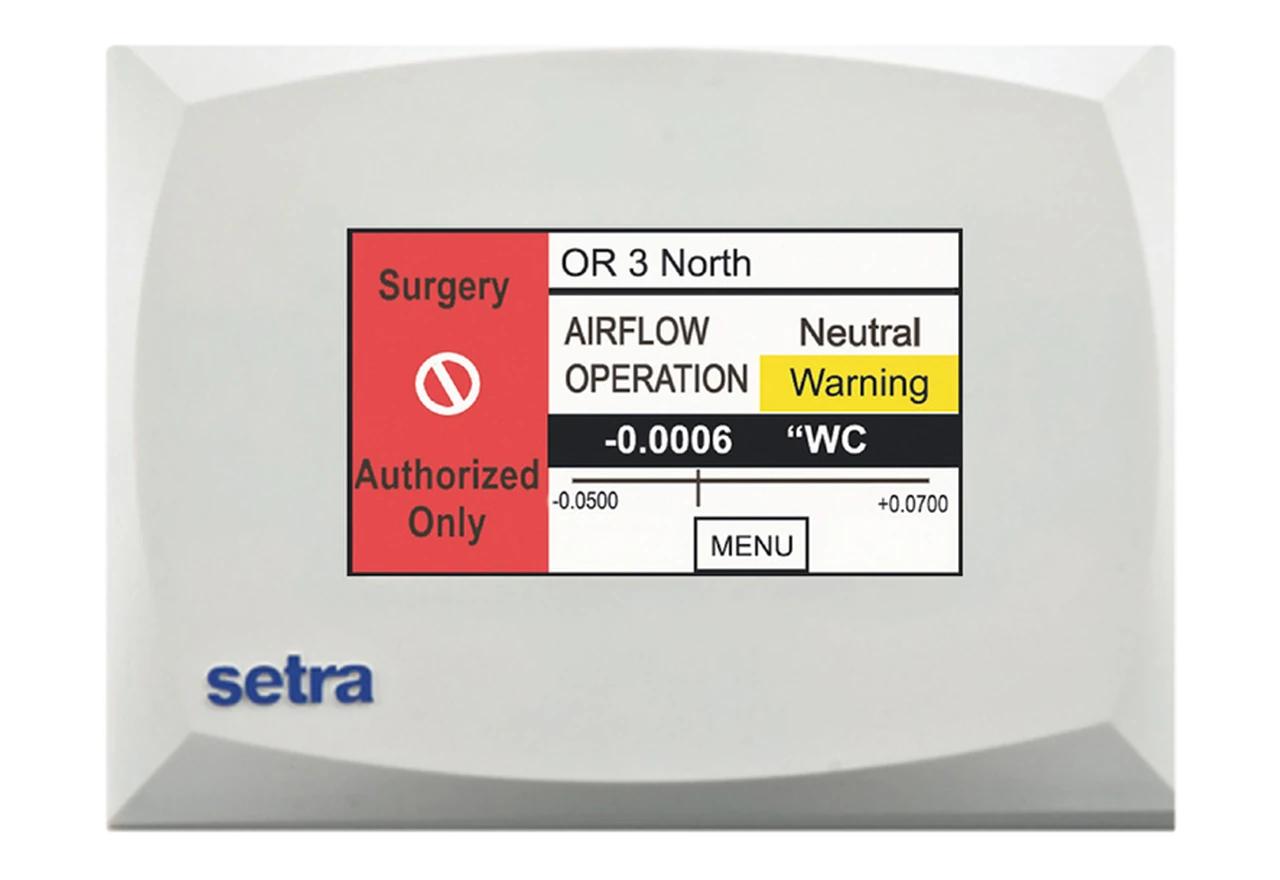
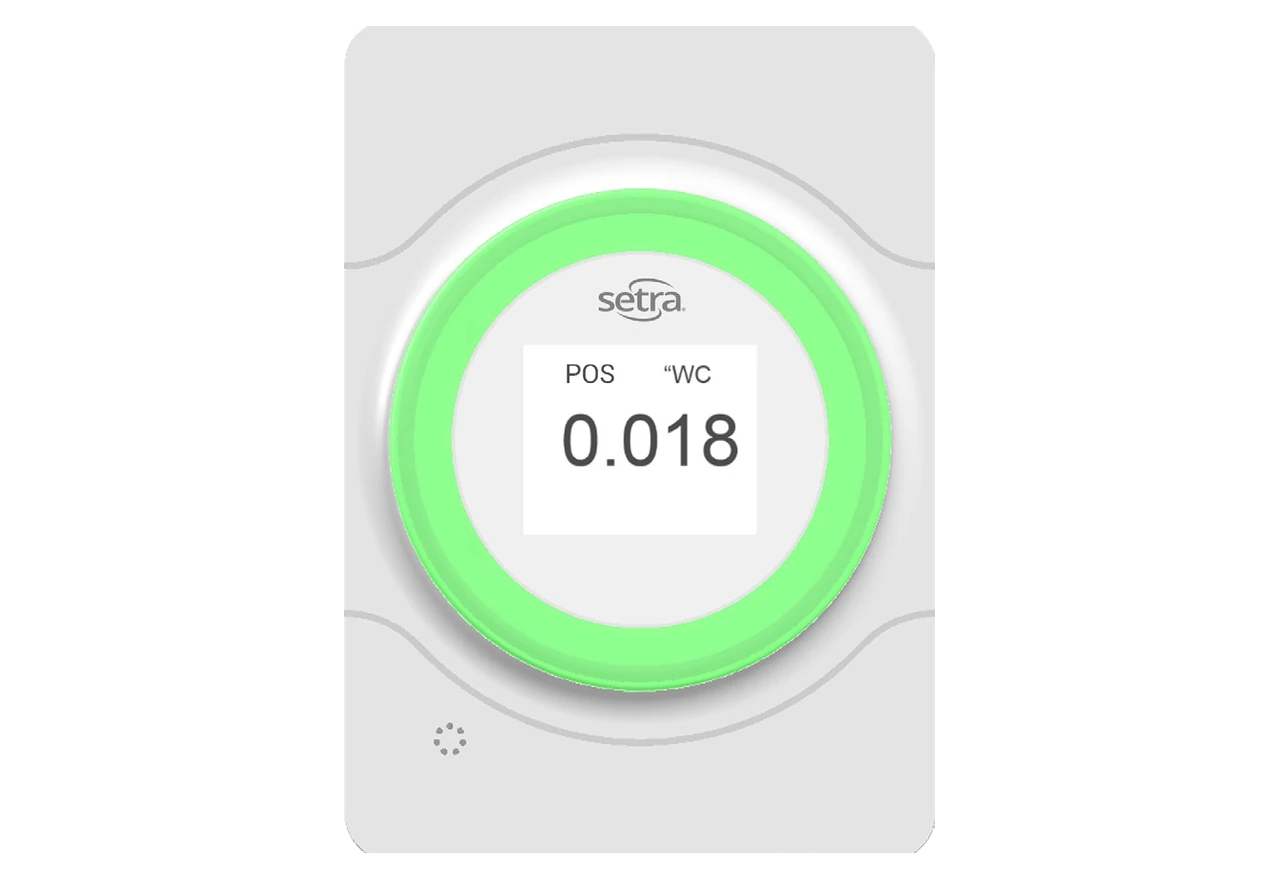
We recommend the monitor for each room and deliver it as a complete system. Our main range is from Setra Systems:
What we deliver
- Design and engineering of the monitoring scheme
- Supply of room monitors and sensors
- Installation and cabling
- Programming and configuration
- BACnet integration with the BMS
- Testing, commissioning and handover
- After-sales support
Where we work
From our office in Riyadh we deliver projects across Saudi Arabia, and also in the UAE and Oman.
FAQ
What is a differential pressure display?
A room pressure monitor, also called a differential pressure display or room pressure indicator, is a wall-mounted device at the door of a critical room. It measures the pressure difference between the room and the corridor in pascals, shows whether the room is negative or positive, and raises an audible and visual alarm when the pressure is lost, for example when the door is left open.
Where can I buy room pressure monitors in Saudi Arabia?
Electrex Arabia supplies, installs and commissions room pressure monitors, including Setra FLEX, SRCM and Lite, for hospitals, pharmacies, laboratories and clean rooms across Saudi Arabia. Send your room list by email or WhatsApp for an offer.
How much does a room pressure monitor cost?
The price depends on the model, the number of parameters, the pressure range, BMS integration and the installation scope. We price each project from the room schedule and reply with a technical and commercial offer.
Where is the monitor installed?
On the corridor wall next to the room door, at eye level, so staff can see the room status before entering. The reference pickup is in the corridor and the room pickup is inside the room or above the ceiling.
What is the difference between negative and positive pressure rooms?
A negative-pressure room has lower pressure than the corridor, so air flows in and contaminants stay inside; it is used for infectious patients. A positive-pressure room has higher pressure, so air flows out and protects the patient inside; it is used for operating theatres and immunocompromised patients.
What pressure should an isolation room hold?
ASHRAE 170 requires at least 2.5 Pa (0.01 in WC) negative for airborne infection isolation rooms and at least 2.5 Pa positive for protective environment rooms. The project specification sets the final setpoint.
How often should a room pressure monitor be calibrated?
Most hospitals verify and calibrate room pressure monitors at least once a year, or as required by their accreditation and maintenance plan. The monitors we supply have push-button zero and span calibration.
Why does the alarm sound when the door opens?
Opening the door equalises the pressure for a moment. A door delay, usually set in seconds, stops nuisance alarms; if the door stays open longer than the delay, the alarm sounds.
Can room pressure monitors connect to the BMS?
Yes. Depending on the model they connect over BACnet/IP, BACnet MS/TP or an analog 4-20 mA / 0-10 V signal. We do the integration and point mapping with the BMS.
Can you replace old ball-in-tube pressure indicators?
Yes. Digital monitors such as Setra Lite are designed to replace ball-in-tube indicators and add a clear display, alarms and a BMS signal.
Do you install in existing hospitals?
Yes. We survey the rooms, choose flush or surface mounting to suit the wall, and plan the work to keep disruption in operating departments to a minimum.
Setra, Setra Systems, FLEX, SRCM and Setra Lite are trademarks of Setra Systems, Inc. Product names are used only to identify the equipment we supply and install. Specifications are from Setra's published data sheets and may change; the final selection follows the approved project submittal.
Have drawings or a BOQ? Send them over.
Our engineers reply with a technical and commercial offer.